Media Wall Lighting: Placement, Colour Temperature and Wiring
Good media wall lighting should shape the room without drawing attention to the fitting itself. We plan the position, colour, brightness and access before the joinery is built. That keeps the LEDs hidden, the light soft and every driver or cable reachable when it needs attention.
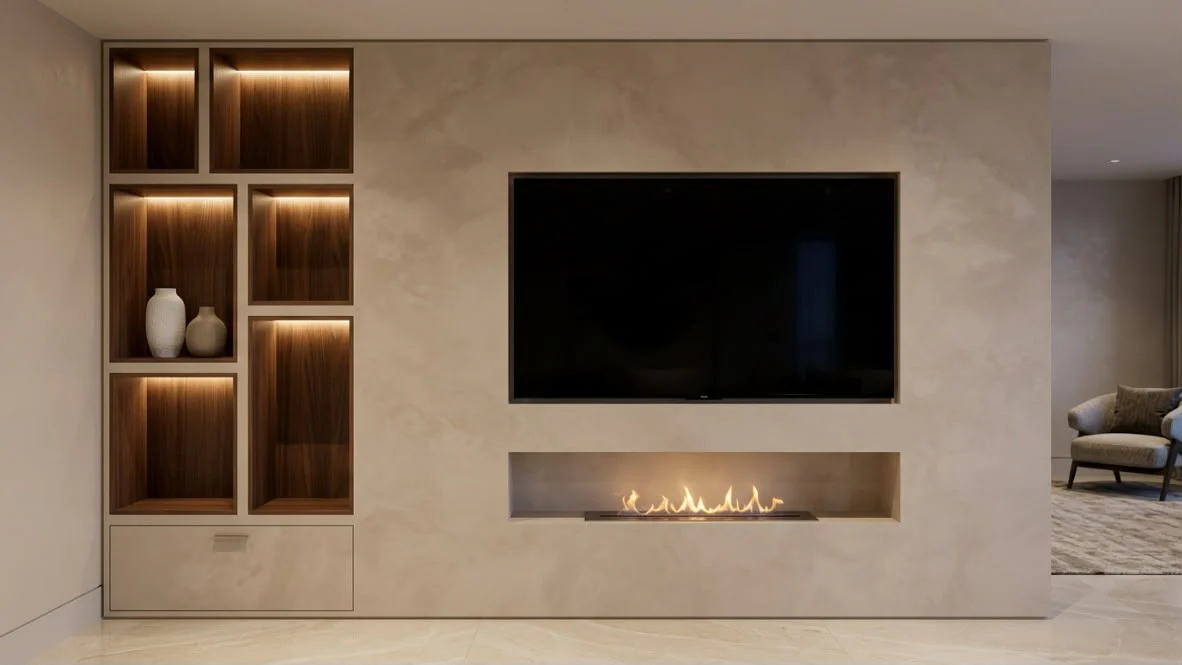
The light should appear. The fitting should disappear.
When I design a media wall, I do not want to see an LED strip or bulb from the normal seating position. The light should feel as though it is coming from the joinery itself. That means setting it back, hiding it inside a channel and giving it enough room to wash across the surface rather than pointing into the room.
The room matters as much as the wall. We look at the colours, finishes, natural light and the time of day the television is normally used. Most clients turn the main light off for evening viewing, so the media wall lighting becomes part of the atmosphere. It needs to be calm enough to sit beside a bright screen without becoming another distraction.
Where media wall lighting should sit
Shelf lighting works best when the source is hidden above or behind the front edge and the light reflects from the inner surface. In a dark room, warm light across an oak or walnut veneer gives the shelving depth without exposing the strip. Vertical channels can do the same job on slatted panels, provided the source is concealed from the main viewing angle.
Lighting behind the television needs even more restraint. We normally begin at around 30% brightness and adjust it in the room. The aim is a soft glow emerging from behind the screen, not a bright frame around it. Too much output competes with the picture and can reflect in glass doors, polished finishes or the television itself.
- Hide the source from the normal seating position
- Use reflected light to reveal timber grain and shelf depth
- Set television backlighting low enough to avoid glare
- Check the effect with the main room lighting switched off
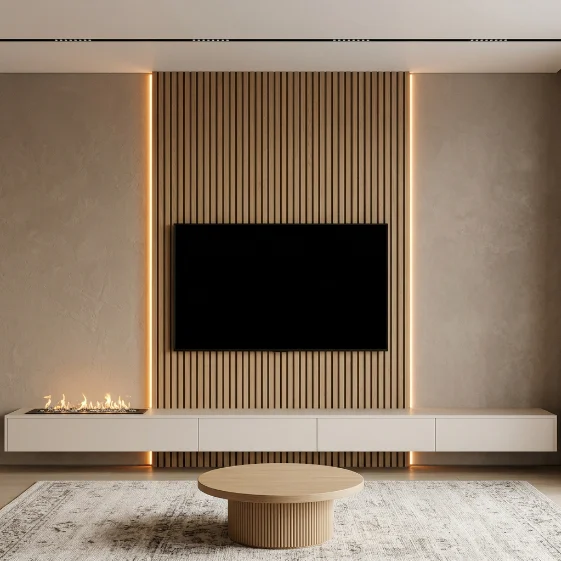
Why we keep media wall lighting at 2700K
We generally stop at 2700K for white media wall lighting. It is the soft yellow tone we prefer for evening rooms, particularly beside walnut, oak, bronze, cream plaster and other warm finishes. Cooler light can make those materials look flat and can turn an otherwise comfortable living room into something closer to a display showroom.
Some clients ask for app-controlled strips that can change between blue, orange and different whites. We can allow for that type of control, but our own preference is simpler: one carefully chosen warm tone, dimmed to the right level and operated by a straightforward remote or wall control.
Colour temperature describes whether the light looks warm or cool. CRI describes how faithfully colours and materials appear beneath it. A warm strip with poor colour rendering can still make timber, paint or artwork look dull. We check the light against the actual finish sample rather than choosing it from the Kelvin number alone.
| Specification | How it feels | Our view | What to check |
|---|---|---|---|
| 2700K | Soft and warm | Our normal maximum for white light | View it beside the final finish |
| 3000K | Cleaner and less yellow | Usually cooler than we want | Compare it with the room lamps |
| 4000K | Cool and bright | Rarely suitable for evening media walls | Watch for a clinical effect |
| High CRI | Materials read more accurately | Worth specifying | Check the full LED specification |
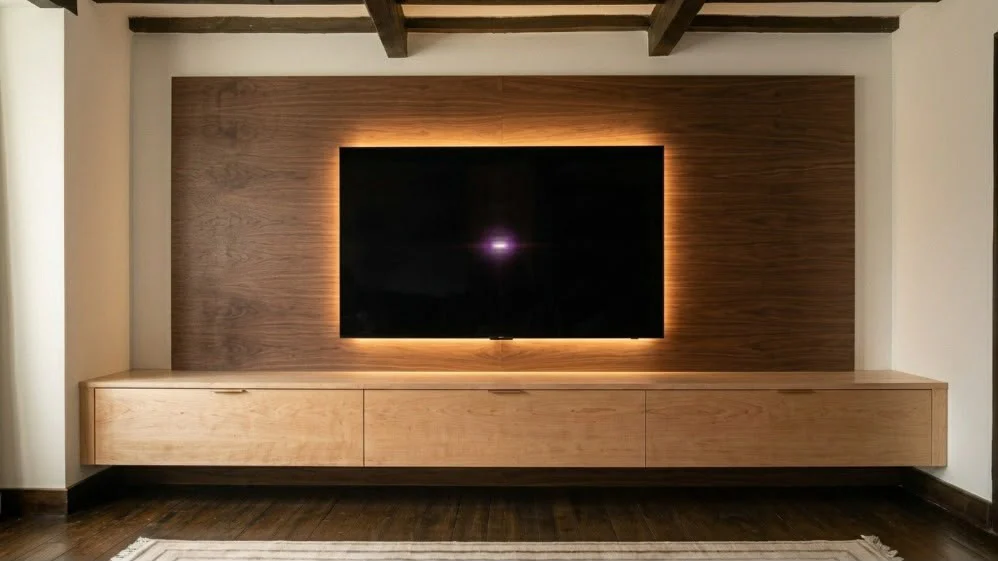
Plan the lighting before manufacture
Decide what the light should do before choosing the LED
We design the channels, access panels, controls and cable routes with the media wall so the finished light feels intentional.
LED tape, channels and diffusers
COB LED tape places the light sources close together, which can produce a more continuous line than a conventional dotted strip. It is useful when the illuminated surface sits close to the source, but COB tape does not correct poor placement. If the strip remains visible or has no room to cast light, the result will still look harsh or weak.
We install the LED inside a channel rather than sticking bare tape directly to finished joinery. The channel gives the strip a straight, protected route and helps manage heat. A diffuser softens the visible line, while a routed recess allows the complete fitting to sit flush and out of sight. The strip and diffuser must remain removable so that maintenance does not damage the cabinet.
Driver access, dimming and wiring
Lighting zones, switching and cable routes need to be agreed before the wall is closed. Shelf lighting may need a different level from television backlighting, and the selected driver must be compatible with the control method. We also allow for the television, soundbar, internet equipment, games consoles and any bar appliances at the same stage so that one system does not block access to another.
Every media wall needs an access panel or removable compartment. Ours sits behind or within the cabinetry so plugs, low-voltage connections, Sky boxes and LED drivers can be reached without cutting into plaster or veneer. Drivers and controls can eventually fail. Hiding them permanently may produce a clean photograph on installation day, but it creates an avoidable repair later.
- Record every lighting zone on the drawing
- Match the dimmer or controller to the selected driver
- Keep drivers and plug connections accessible
- Leave a practical route for future cable replacement
Media wall lighting specification checklist
Lighting should be drawn and priced as part of the media wall, not added as a vague allowance. Before approving the design, ask where each source will sit, what it will illuminate, how bright it can be set and how every replaceable part will be reached. Those answers matter more than the number of metres of LED tape in the quote.
- Position, setback and direction of every light source
- 2700K colour temperature and the agreed CRI specification
- LED tape, channel and diffuser product details
- Driver location, ventilation and access method
- Switching, dimming and separate lighting zones
- Cable routes and removable panels for future maintenance
Media wall lighting FAQs
What colour temperature is best for media wall lighting?
We normally use 2700K because it produces a warm, soft light that suits evening television viewing and timber or plaster finishes. We rarely recommend 4000K around a media wall because it can look clinical beside the rest of a living room.
Can LED strips be replaced after the media wall is finished?
Yes, if replacement has been designed in from the start. We use channels with removable diffusers and provide access to the connections, so the strip can be changed without damaging the finished joinery.
Where should the LED driver be installed?
The driver should sit in a ventilated, accessible compartment rather than being sealed behind plaster or veneer. We include an access panel so the driver, plugs and low-voltage connections can be inspected or replaced later.
Does media wall lighting need to be dimmable?
We recommend dimming, especially around the television. Backlighting often looks best at around 30% during evening viewing, but the final level depends on the room, the finish and the brightness of the screen.