Wooden Media Walls. Timber Chosen for Your Light.
A Wall That Feels Warm Before the Fire Is On
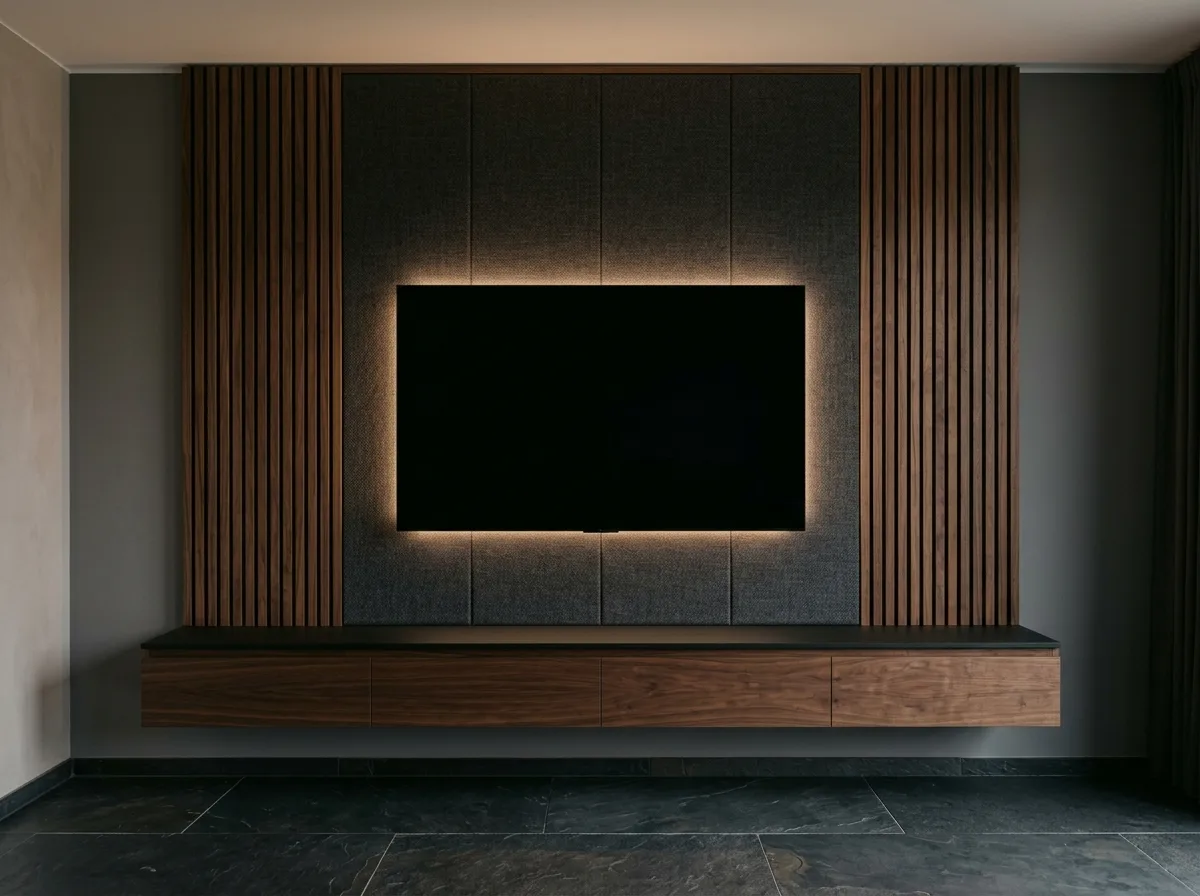
A wooden media wall wraps the TV, storage and lighting in timber: slatted battens, flat veneered panels or a mix of both. Where a painted wall reads as background, timber reads as material. The grain catches lamplight in the evening and daylight in the morning, and the room feels furnished even when the screen is off.
We design and build wooden media walls in oak, walnut and smoked oak, with honest specification of what is veneer and what is solid. Slat walls, backlit TV recesses, floating cabinets and integrated fires are all part of the same build, delivered by our own team at a fixed price. We work across Surrey, Buckinghamshire and London, and the panelled builds share a workshop with our media walls with panelling.
The rooms shape the timber choice. New-build apartments in Woking and Kingston tend to have good light and low ceilings, where pale oak keeps things open. The larger detached homes around Guildford, Weybridge and Ascot take walnut and smoked oak comfortably, especially in evening rooms built around a fire. In London's Victorian terraces the slat runs work hardest, because the vertical lines add height to rooms that have plenty of character but not much width.
- Oak, walnut and smoked oak, sampled in your room
- Real timber veneer and solid wood, specified honestly
- Slatted, flat panel or combined designs
- All work by our own team. No sub-contractors.
The Three Timbers We Build Most
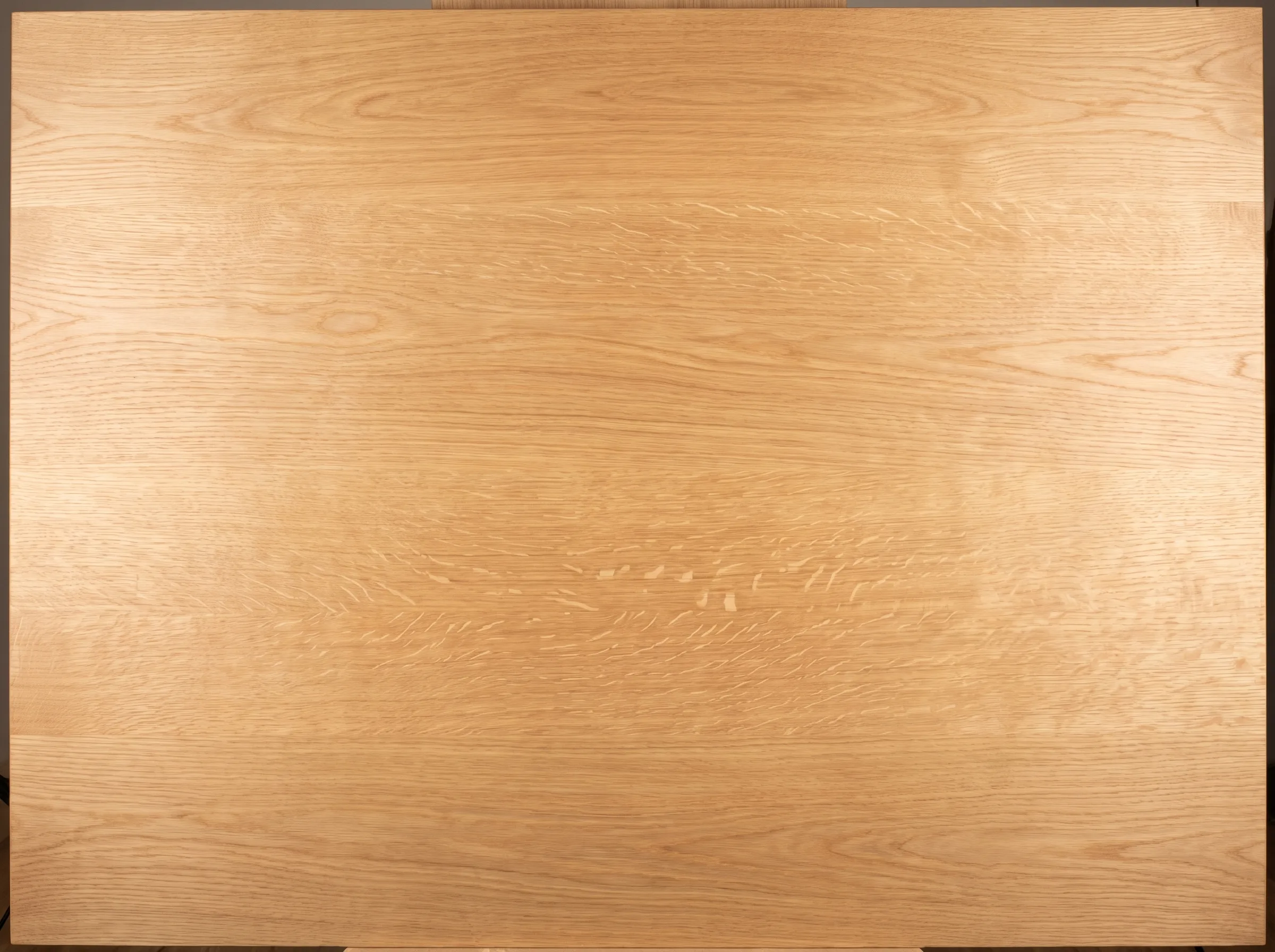
Blonde European Oak
Pale, open-grained and calm. The choice for rooms that need to stay feeling light. Pairs well with plaster and pale walls, and holds its own in daylight better than any darker species.
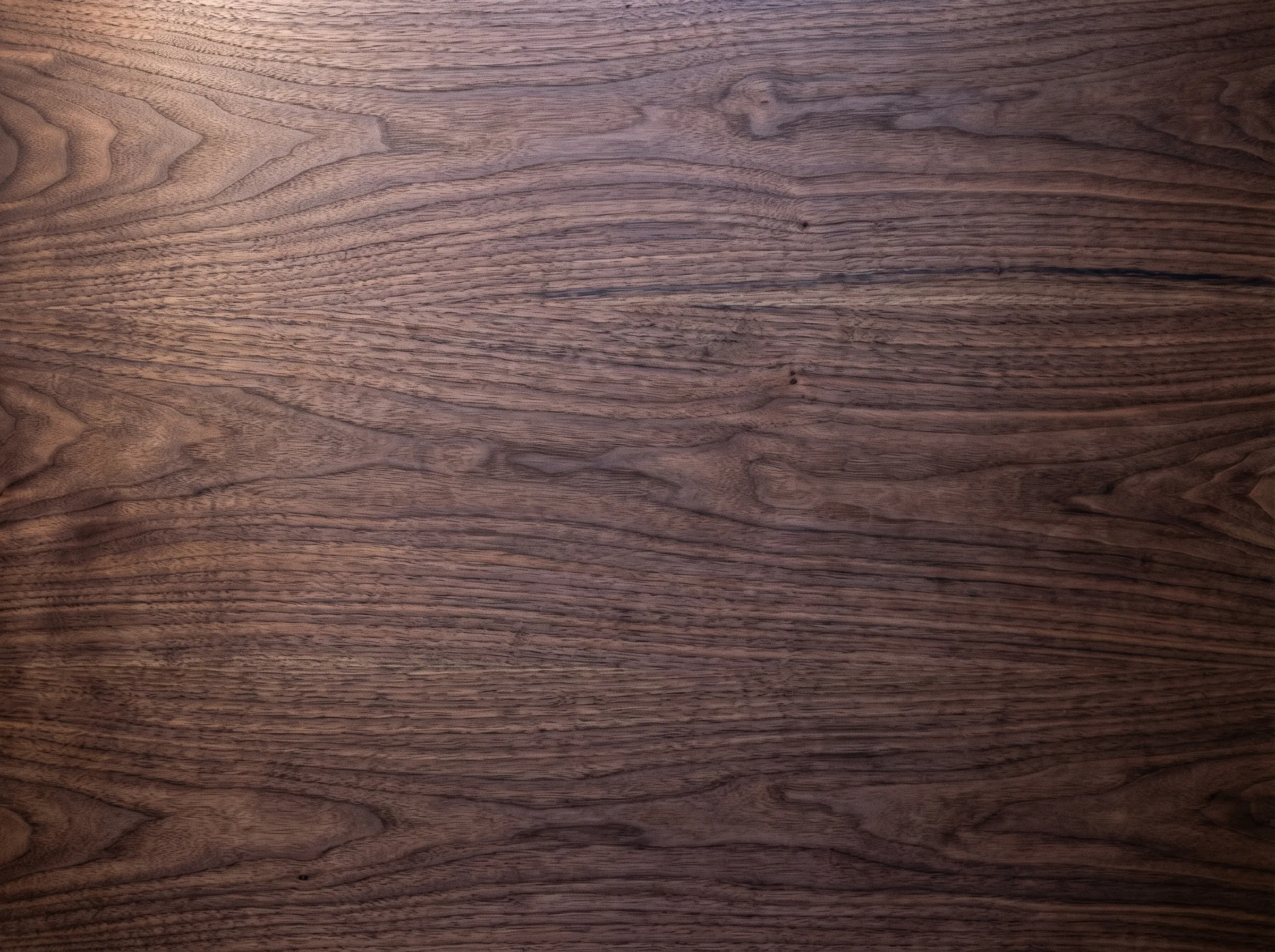
American Black Walnut
Rich, flowing grain in mid brown. The most requested timber for evening rooms. Under warm LED light it is the wall everyone photographs. In a dark north-facing room it needs designed lighting to earn its keep.
Smoked European Oak
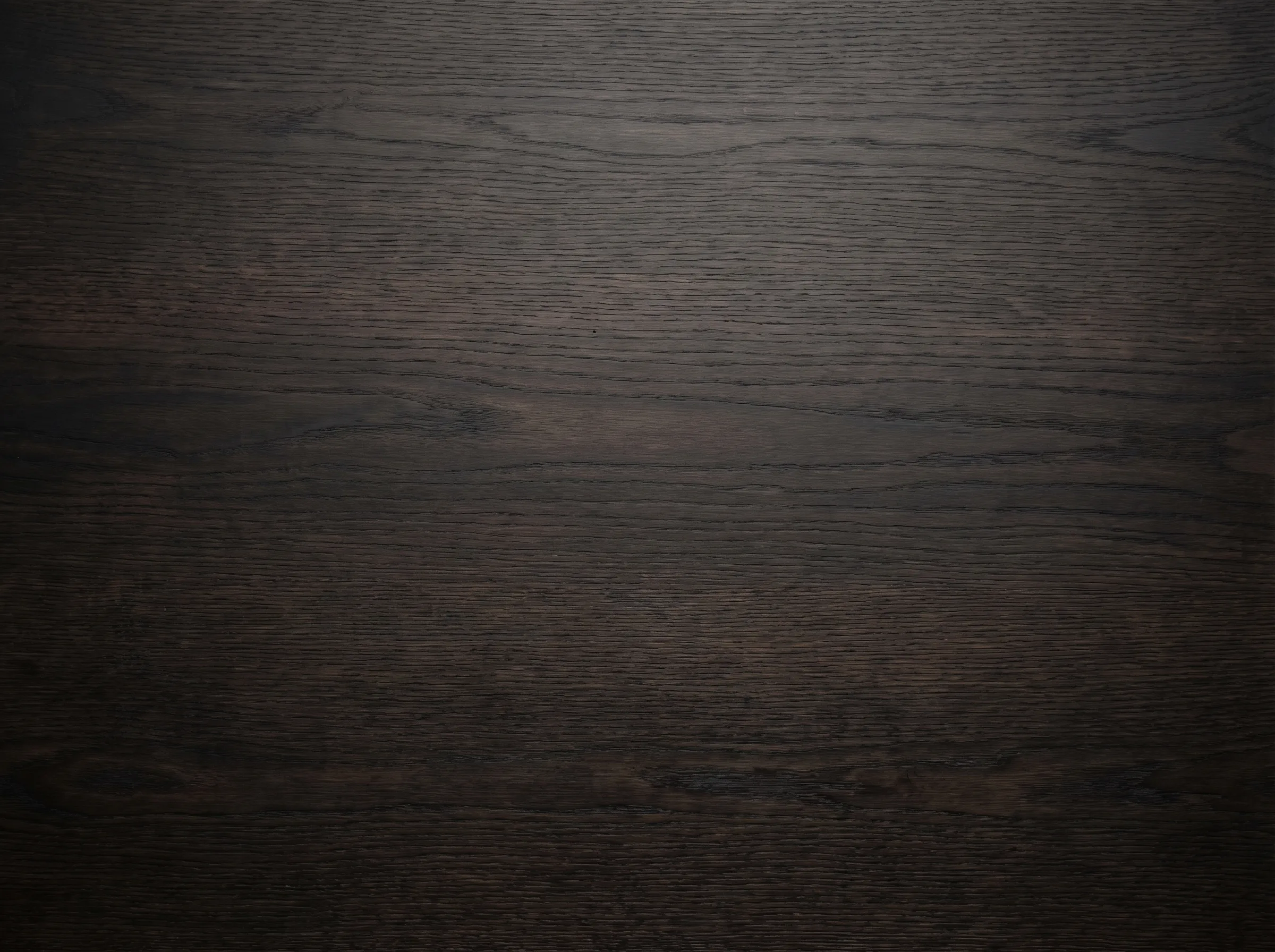
Fumed to a deep espresso tone that runs through the timber rather than sitting on it. Where walnut reads too red, smoked oak reads quiet and architectural. The most stable of the three under UV.
The Timber Decision
Veneer Is Not a Dirty Word. Foil Is.
Large timber panels are veneered by every serious joinery workshop in the country, because solid timber at panel scale cups and splits as humidity changes. The material to avoid is printed foil pretending to be timber, which is most of what is sold as a "wood media wall" online. Our rule is simple: veneered board on the big flat faces, solid timber on every edge, frame and surface you touch. The quote states which is which, line by line.
Choose the Timber in Your Room, Not a Showroom
Walnut in a bright south-facing room and walnut in a north-facing room are two different materials. One glows; the other goes flat and dark by mid afternoon. This is the single most common regret we see in timber walls built from photographs. We bring full-size finished samples to the consultation and stand them against your actual wall, at midday and again under your evening lighting where the decision is close. Ten minutes of looking saves years of wishing.
Timber and Fire Can Share a Wall
An electric fire in a timber wall is safe when the build follows the manufacturer's clearance and ventilation specification, and a liability when it does not. The fire sits in its own chamber with heat directed out and away from the timber faces, never up into a batten run. We ask for the fire model before we draw the wall, because the chamber is engineered around it. If a design puts hot air against timber, we change the design, not the tolerance.
The Door That Disappears into the Slats
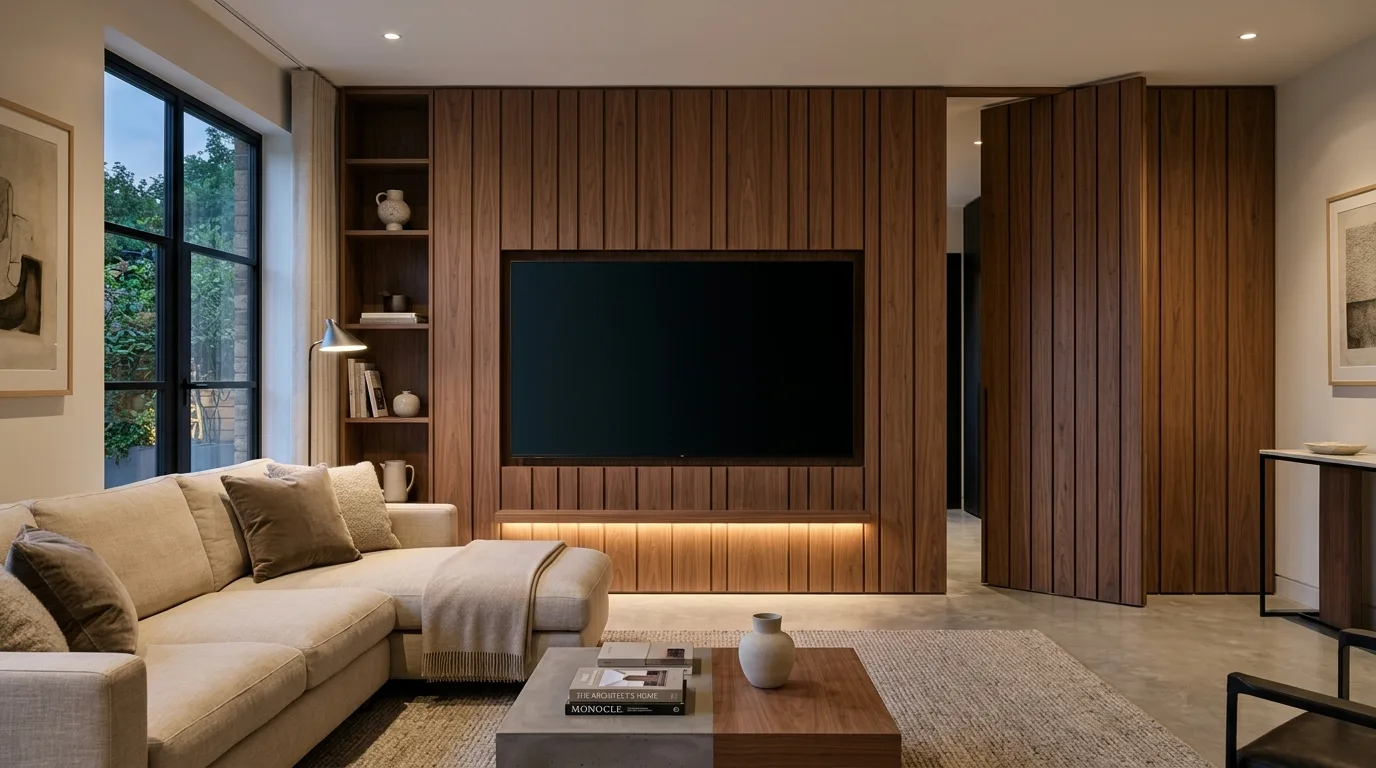
A recent living room build in the Home Counties had a problem that timber solved. The only wall long enough for the media wall had a doorway to the hallway at one end. A standard build would have stopped short of the door and looked like exactly that: a unit parked next to a door.
Instead we ran the walnut slats across the full wall, door included. The door became a concealed pivot leaf carrying the same battens, with the gaps around it falling on the shadow lines between slats. Closed, the wall reads as one continuous run of timber and the doorway is gone. The TV recess and shelving sit off-centre so the composition balances with the door shut, which is how the wall spends most of its life.
The setting out took a full day before a single batten was fixed. Every slat spacing on the wall was adjusted by 2mm so that the door edges landed in shadow gaps. That is the part no photograph shows, and the reason the photograph works.
Discuss Your BriefWhat Does It Cost?
Every project is bespoke. All quotes are itemised and fixed before work begins. No hidden costs.
Get a fixed priceBespoke
From £7,500
A slatted or flat-panel wooden media wall with TV recess, floating cabinet, concealed cabling and integrated LED lighting in your chosen timber.
- ✓Oak, walnut or smoked oak
- ✓Slatted or flat panel design
- ✓Floating cabinet and TV recess
- ✓Concealed cable management
- ✓Fixed price before work starts
Premium
From £11,000
Floor-to-ceiling timber build with cupboards, shelving, integrated electric fireplace and details such as concealed doors or acoustic panel sections.
- ✓All standard features
- ✓Integrated electric fireplace
- ✓Cupboard and shelving bays
- ✓Concealed door integration
- ✓Solid timber touch surfaces
Guide prices based on standard ceiling heights of 2.4m to 2.5m. Final cost depends on timber choice, wall dimensions, AV complexity and site conditions.
Wooden Media Wall FAQs
Questions about timber choice, veneer versus solid, fireplaces and cost.
Ask a questionA wooden media wall starts from £7,500 for a slatted or veneered timber build with TV recess, floating cabinet and integrated lighting. A floor-to-ceiling build in walnut or smoked oak with cupboards, shelving and an integrated fireplace typically ranges from £11,000 to £18,000. Solid timber elements such as shelves and edge details add cost where they are specified. All quotes are itemised and fixed before work begins.
The three we build most are natural European oak, American black walnut and smoked oak. Oak reads light and Scandinavian, and it suits rooms that need to stay feeling open. Walnut is richer and warmer, and it comes alive under evening lighting. Smoked oak sits between a mid brown and espresso, and it works where walnut feels too red. The right answer depends on your room's light, which is why we bring full-size samples to the consultation rather than choosing from a screen.
It depends who builds them. Much of what is sold online is MDF wrapped in a printed foil, which looks convincing in photographs and less so at arm's length. Our slat walls are real timber veneer on a stable core, with solid timber used where hands and eyes get close: shelf edges, cabinet fronts and any surface you touch daily. We are open about exactly what is veneer and what is solid in every quote, because each is the right material in the right place.
Both, in different places. Large flat panels want veneered board because solid timber moves with seasonal humidity and a solid panel that size would cup and split. Shelf edges, frames and touch surfaces want solid timber because it wears and repairs better. A media wall built entirely from solid wood would be unstable and needlessly expensive. One built entirely from foil-wrapped MDF is what we are usually asked to replace.
Yes. Electric fires are designed for building into joinery, and manufacturers publish clearance and ventilation requirements for each model. We build to those specifications: the fire sits in its own ventilated chamber, heat is directed away from the timber faces, and the surround detail is designed so the timber never sits against a heat outlet. The fire model needs choosing before the build starts because the chamber is sized to it.
All timber responds to UV light. Oak mellows towards honey, walnut lightens slightly rather than darkening, and smoked oak is the most stable because the tone comes from fuming rather than the surface. We finish timber with UV-inhibiting lacquers that slow the shift considerably. The practical advice: if you hang artwork on a timber wall, expect a shadow line if you move it years later, the same as paint.
A wooden media wall typically takes 4 to 8 days on site depending on the extent of cabinetry and whether a fireplace is integrated. Slat runs take longer than flat panels because each batten line is set out and fixed individually. Components are machined and finished before we arrive to keep time in your home short. The exact programme is confirmed with your quote.
Related Services
More Media Wall Options
Ready to Start?
Complimentary consultation across London and Surrey. Timber samples brought to your room. Fixed price before work begins.