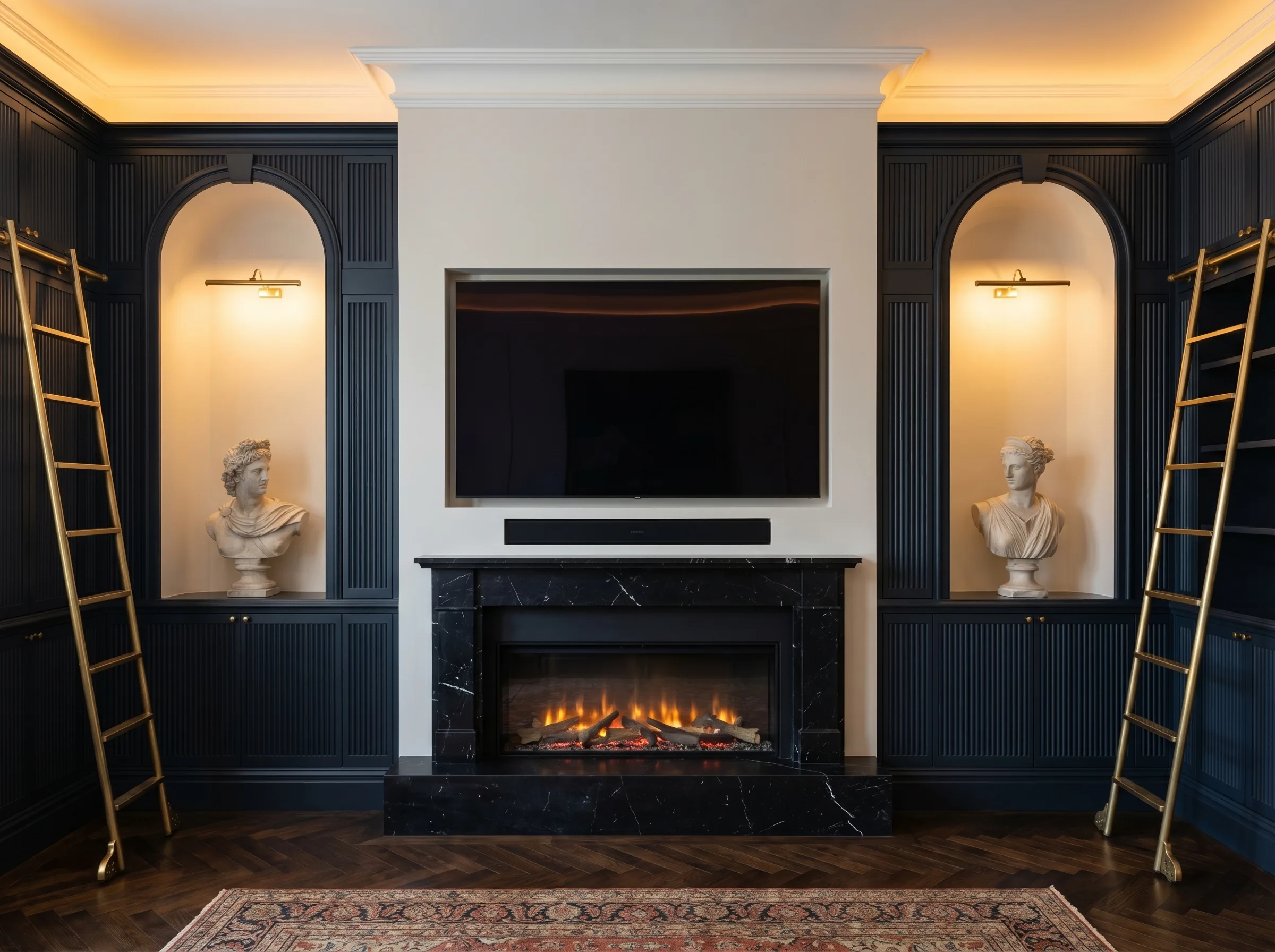
Most people spend weeks researching media wall ideas. They save photos, measure walls, look at materials. What they spend almost no time on is who they hire to build it. That tends to sort itself out. Someone comes recommended, quotes a fair price, seems fine. The problems usually start halfway through.
Ask whether the build team is their own
The first thing worth asking is whether the company uses their own joiners or sends in subcontractors for parts of the job. Neither is automatically wrong. But you want to know before work starts, not when you come home to find someone you have never met cutting MDF in your living room.
An in-house team has a direct line to whoever quoted the job. If something goes wrong or needs adjusting mid-build, the fix comes from the same people. With subcontractors, accountability splits. The original company tells them what to do; the subcontractor interprets it. Anything that falls between the two becomes a dispute you end up refereeing.
Ask directly: does your own team carry out all of the work on site? A company that uses its own people gives you a straight answer.
Understand the payment structure before you agree to anything
A fixed price before work begins is standard. What varies is how the payments are structured through the job. Some companies ask for 50% upfront, 50% on completion. Others front-load the schedule so the bulk of the money is collected before the finishes are done.
The risk with front-loaded payments is straightforward: once the contractor has been paid, your leverage over any outstanding snags disappears. A cupboard door that needs remaking, a plastered surface that needs reworking, a light switch that needs relocating: these stay on the list indefinitely when the money has already gone.
Ask for the payment terms in writing before you commit. Make sure a meaningful amount is held back until practical completion, confirmed on site, not just confirmed by the contractor saying the job is done.
Talk through the AV spec before the frame goes up
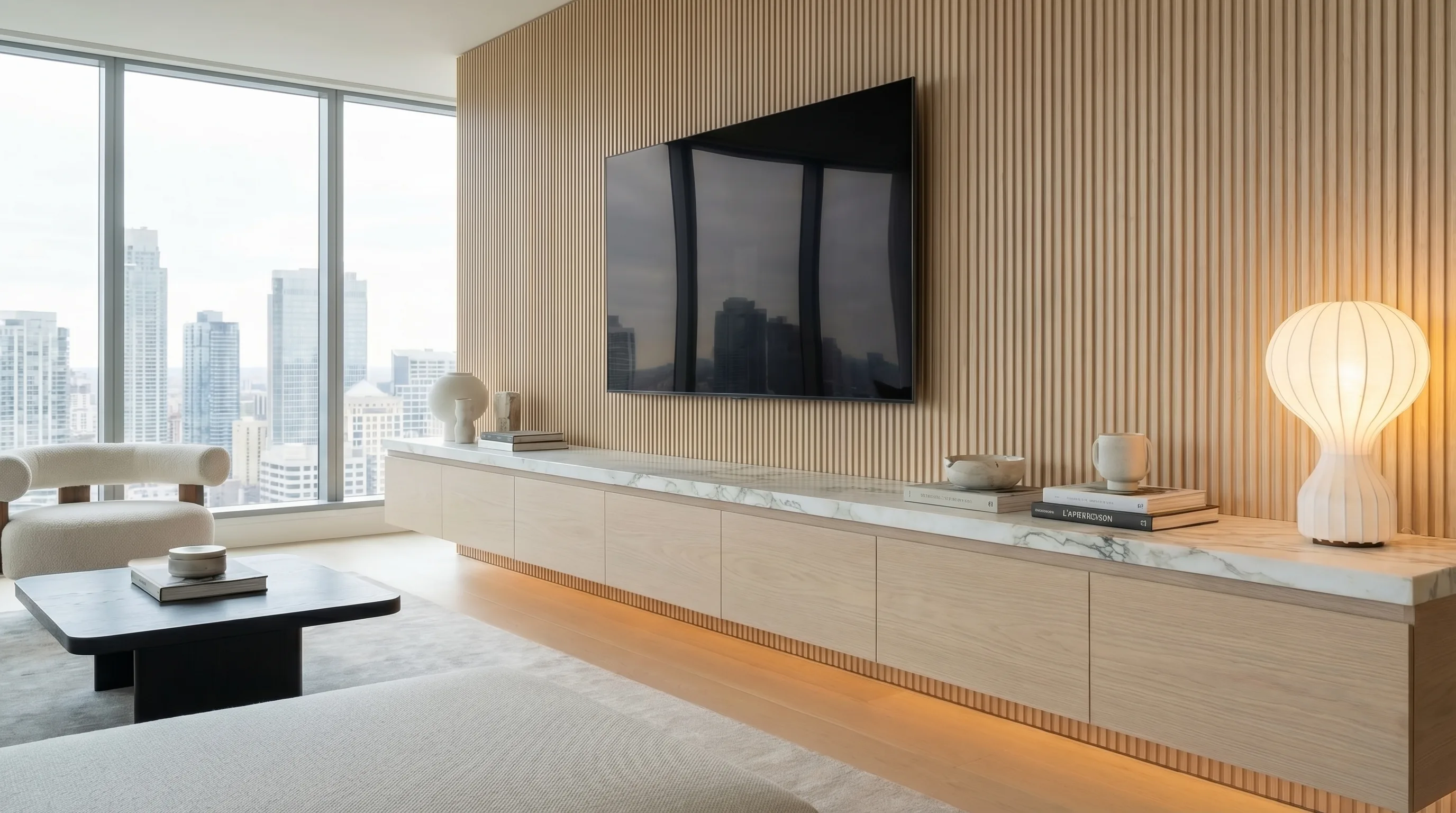
Soundbar recesses, TV openings and equipment bays are fixed once the framing is done. Changing them afterwards means structural work. Before the design is finalised, go through the AV setup in detail: which soundbar and what are its exact dimensions, where does the equipment live, what are the cable runs. A good company asks these questions without prompting. If they do not, raise them yourself.
The specific numbers matter. A Sonos Arc soundbar is 1141mm wide. A Samsung HW-S800B is 1280mm. A recess built for one will not fit the other. The same applies to the TV: the listed screen size is a diagonal measurement. A 75 inch screen is 168cm wide. A 65 inch screen is 144cm wide. These figures set the opening dimensions, and the opening dimensions set every proportion that follows.
If you are still choosing between soundbars or TVs at the time of the design, say so. A good company will either wait until the spec is confirmed or build in enough tolerance to accommodate the likely range. Either way, ask to see the wall drawn to the millimetre against your actual products before anything is cut. If the recess is drawn as a generic TV shape rather than your TV, the numbers above are not being taken seriously.
The TV recess question most people do not think about
Recessed TV openings look clean. They also lock you into a screen size. The opening is framed during structural work, plastered, and finished. Changing it later means going back into the wall. If there is any realistic chance you will want a significantly larger screen at some point, and going from 75 inch to 98 inch is not an unusual step, it is worth discussing before you commit.
A floating shelf or chimney-breast-style build gives you something that looks almost identical in the finished room but keeps the screen position completely flexible. The TV sits on a shelf or within a false breast rather than in a framed opening. Same clean aesthetic, no permanent decision on screen size.
This is not always the right choice. A properly built recess integrates with the joinery more naturally and usually looks more resolved. The point is that it is a permanent decision, and the right time to have the conversation is in the design meeting, not after the plasterer has been in.
What happens at handover tells you a lot
A professional handover takes time. Not because there is a lot of paperwork, but because the time is actually used: walking through every door, every shelf, every cable run, every light zone. Demonstrating the AV connections. Leaving the site clean. Providing a written document that covers the guarantee, the material references and supplier contacts for anything that might need matching later.
A company with no handover process, one that considers the job finished when the last panel goes up, is telling you how they work. The job ends when they leave, not when you are satisfied with it.
The handover document is also worth keeping. Two years later, when you want to add a shelf or match a paint colour or pass the information to a new owner, it is useful in a way that is hard to recreate after the fact.
One more thing: the OLED heat question
If you have an OLED TV, it is worth asking about ventilation behind the recess before the design is fixed. OLEDs push heat from the back and sides. A tight recess with no airflow traps that heat, and over time it affects both the picture and the screen's lifespan.
The fix is straightforward: clearance behind the panel and ventilation either through the back of the build or via concealed vents in the cabinetry below. But it needs to be designed in from the start, not retrofitted. Ask about it specifically if you have an OLED. If the company has not raised it already, that is information too.
Based in Surrey?
We cover the full county of Surrey with a complimentary first consultation. No charge, no obligation. If a full media wall is not the right solution for your room, we will tell you at that stage.
Media Walls SurreyCommon Questions
No. A reasonable payment structure holds a meaningful amount until practical completion. Some companies front-load the schedule so that the bulk of the money is collected before the finishes are done. Once that happens, your leverage over any outstanding snags disappears. Ask for the payment terms in writing before you agree to anything, and make sure the final payment is tied to the job being checked and signed off on site.
A walkthrough of every door, shelf, cable run and light zone. A demonstration that the AV connections work. The site left clean. A written document covering the workmanship guarantee, material references and supplier contacts. If the company has no handover process, that tells you something about how seriously they take the finish. The handover document is also useful two years later when you want to match a paint colour or pass the information to a new owner.
Ask directly. A straightforward question gets a straightforward answer from a company that uses its own joiners. With in-house teams, the people on site have a direct line to whoever quoted the job. If something needs adjusting mid-build, the fix comes from the same team. With subcontractors, accountability splits between the company and whoever they sent. Ask: does your own team carry out all of the work on site?
The exact model and dimensions of your TV and soundbar, not just the screen size. The screen size is a diagonal measurement. A 75 inch TV is 168cm wide. A 65 inch TV is 144cm wide. These set the dimensions of the recess and every proportion that follows. You should also confirm where AV equipment will be stored, what the cable runs need to be and whether you have a gas supply to the room if a fireplace is part of the brief. A company that does not ask these questions before producing a design has not thought the build through.