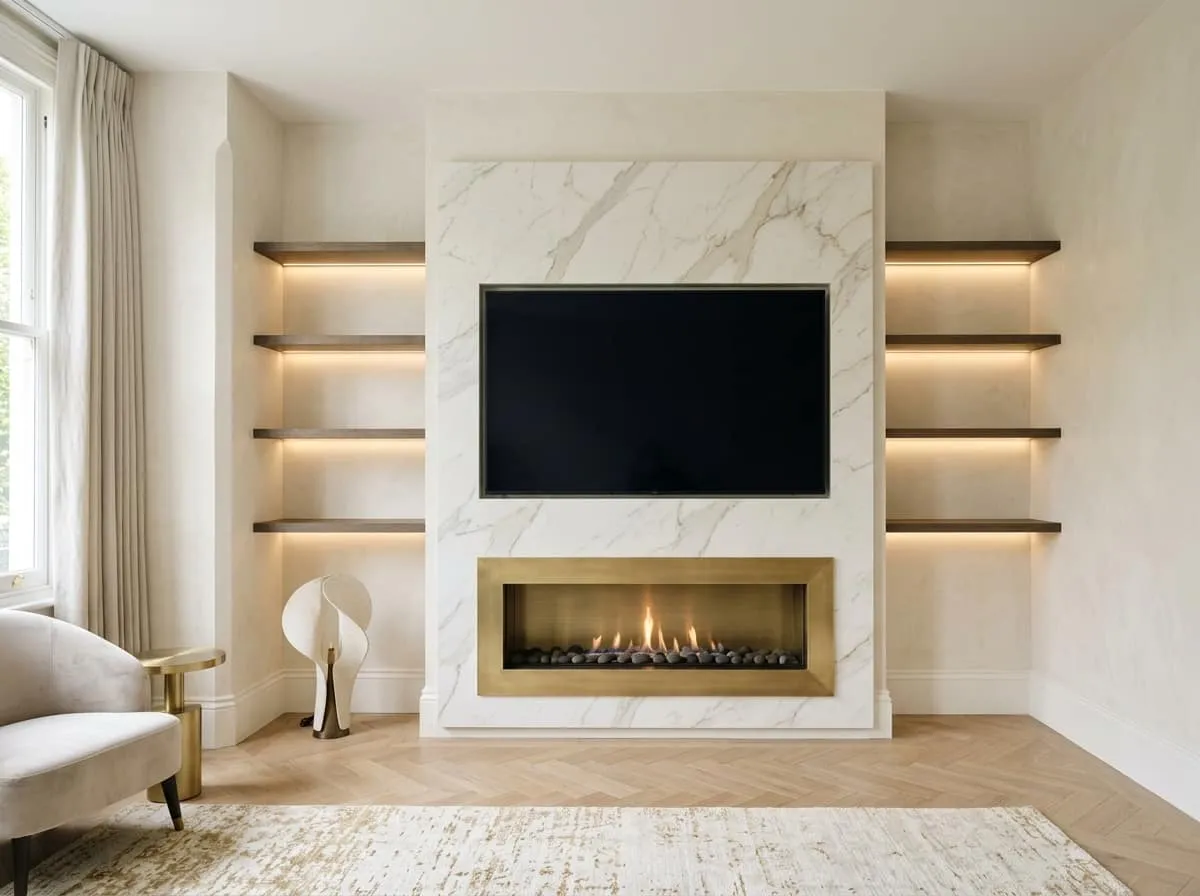
There is a growing demand for media walls that incorporate a real fire. Not an electric flame effect behind a glass panel. A genuine bio ethanol burner, set into a fully bespoke joinery unit, integrated with storage, panelling, and a television. The kind of centrepiece that stops people the moment they walk into a room.
We have built a number of these units across London and the Home Counties. And every time, the same thing becomes clear: most joiners and fitted furniture companies either do not fully understand what this kind of build requires, or they do and they cut corners anyway.
What makes a bio ethanol media wall different
A standard media wall is already a complex piece of bespoke joinery. A bio ethanol media wall adds an entirely different layer on top of that.
Bio ethanol burners produce real flames. They generate genuine heat. They operate within a combustion process that requires proper airflow and ventilation. The materials surrounding the burner are not just a design consideration. They are a safety consideration. Get the materials wrong and you have a fire risk. Get the ventilation wrong and you have a combustion problem. This is not a job for a general joiner who has not worked with fire-rated builds before. It requires research, proper planning, and a willingness to do additional work that most people in this trade simply will not bother with. If you are weighing up bio ethanol against an electric insert, our guide to choosing a fire for a media wall covers the comparison in detail.
The first thing we do: understand the burner
Before we design anything, before we produce a single render, we need to fully understand the specific burner unit going into the build.
Every bio ethanol burner is different. The dimensions vary. The heat output varies. The thermobox requirements vary. The ventilation specifications vary. The manufacturer installation documentation will outline everything required for a compliant and safe installation, and those instructions have to be read and followed precisely.
We have seen projects where joiners skipped this step entirely. They build the niche to approximately the right size, drop the burner in, and hand it over. The result looks fine on the surface. Underneath, the materials are not correctly specified, the ventilation is insufficient, and the installation does not comply with the manufacturer's requirements. Over time, the heat damages the surrounding joinery. We do not work that way.
The thermobox: why it is non-negotiable
At the centre of any correctly built bio ethanol media wall is the thermobox. This is the housing that sits within the niche and separates the burner from the surrounding joinery. It manages the heat, protects the structural frame, and provides the controlled environment the burner needs to operate safely.
The thermobox is not optional. We build the niche and the surrounding unit to work in conjunction with it, not as an afterthought, but as a fundamental part of the structural design from the beginning. The dimensions of the niche are dictated by the thermobox and burner specifications. The frame is built around those dimensions. The panelling, storage, and television housing are then designed to sit around that central structural element.
Material selection: where a lot of joiners get this wrong
The materials used in and around a bio ethanol fire niche cannot be selected on aesthetics alone. Heat-resistant requirements apply not just to the thermobox itself, but to the surrounding finishes within the niche, including the paint or surface treatment on those materials.
Standard vinyl wrapping is not suitable in areas directly exposed to elevated temperatures from a bio ethanol burner. The heat degrades vinyl over time. It lifts, bubbles, and deteriorates. The result is a unit that looks immaculate on the day of installation and starts showing visible damage within months.
When we quote and design these builds, we specify painted MDF with the correct heat-resistant finish for the niche area rather than vinyl-wrapped panels. The visual result is equally high quality, often superior, but the specification is correct for the environment it is operating in. We flag this during the design and quotation stage because it affects material cost and final pricing. The specification is agreed and documented before work begins.
Ventilation: the step that rarely gets mentioned
Proper ventilation within the niche is a requirement for bio ethanol burner installations, and it is one of the least discussed aspects of this kind of build.
A bio ethanol burner is a combustion appliance. It requires adequate airflow to operate safely and efficiently. We build ventilation into the design at the planning stage. Once a media wall is installed, retrofitting ventilation is at best disruptive and expensive, and at worst simply not possible without rebuilding sections of the unit. Planning it correctly at the start is the only sensible approach.
The design process
Once we have the technical foundation established, the burner specifications, the thermobox requirements, the material considerations, the ventilation plan, we move into the design phase.
Every media wall we build is completely bespoke. We do not work from templates. We design each unit specifically for the room it is going into, the client's taste, and the way the space is used. For media walls incorporating a bio ethanol fire, that means designing something that is not just technically correct but genuinely beautiful. A unit where the fire feels like a natural, intentional part of the design rather than something added as an afterthought.
We create detailed rendered visuals for every client before any work begins. You see exactly what your finished unit will look like before a single screw goes into a wall. Panel style, colour, material finish, proportions, LED integration, storage layout: everything is visualised and agreed before we start.
The site visit
Before we provide a final quote and before any work is booked, Luca, our co-founder and installation director, carries out a full site visit. This is not a formality.
During the visit, Luca takes precise measurements of the space, assesses the wall, reviews the structural considerations, and goes through the design in detail with the client. He brings material samples in the specified colours so you can see and feel the actual finish before confirming anything. For bio ethanol builds, he also assesses the ventilation and structural requirements specific to that room.
The site visit is where a rough quote becomes a precise one. It is where we confirm that everything discussed and designed at the planning stage is correct for the actual space. Any surprises get surfaced and resolved before work begins, not during it.
What the investment looks like
A bespoke media wall incorporating a bio ethanol fire is a premium build. It requires additional technical expertise, correct material specification, and a more involved design and installation process than a standard media wall.
Our investment range for this type of project typically starts from around £7,500 to £8,500 and above, depending on the specific design, dimensions, materials, and finish confirmed at the site visit stage.
We do not provide final fixed quotes before a site visit, because the accuracy of a quote depends on seeing the actual space. What we do provide is a clear investment range early in the conversation so you understand the level of commitment involved before we go any further. Once work is agreed, the price is fixed and in writing. We work across Surrey and London. Book a consultation to discuss your project in detail.
Common questions
A thermobox is the housing that sits within the niche and separates the burner from the surrounding joinery. It manages heat output, protects the structural frame, and provides the controlled environment the burner needs to operate safely. It is not optional. Every bio ethanol media wall we build is designed around the thermobox from the first drawing, with the niche dimensions dictated by the burner and thermobox specifications.
Not safely. A bio ethanol burner produces real flames, generates genuine heat, and requires specific airflow to operate correctly. The surrounding joinery must use fire-rated materials in the niche area, the thermobox must be installed to the manufacturer's specification, and ventilation must be planned into the build from the start. A general joiner who has not worked with this type of installation before is likely to miss at least one of these requirements. The result looks fine on day one and starts showing problems later.
Standard vinyl-wrapped panels are not suitable in the niche area. The heat from a bio ethanol burner degrades vinyl over time, causing it to lift and bubble. In areas directly exposed to elevated temperatures, we specify painted MDF with a heat-resistant finish. The surrounding cabinetry outside the niche can use standard finishes. The distinction matters and it is one most companies do not flag to their clients upfront.
Our investment range for this type of build typically starts from £7,500 to £8,500 and above, depending on the design, dimensions, materials, and finish. A bio ethanol build requires more technical work than a standard media wall: correct material specification, thermobox installation, ventilation planning, and a full site visit before we commit to a final price. We provide a clear investment range early in the conversation so there are no surprises.
Yes. A bio ethanol burner is a combustion appliance and requires adequate airflow to operate safely and efficiently. The niche must be designed with ventilation built in from the start. Retrofitting ventilation after the unit is installed is disruptive at best and often not possible without rebuilding sections of the wall. This is one of the steps that rarely gets mentioned, and one we plan for on every build.