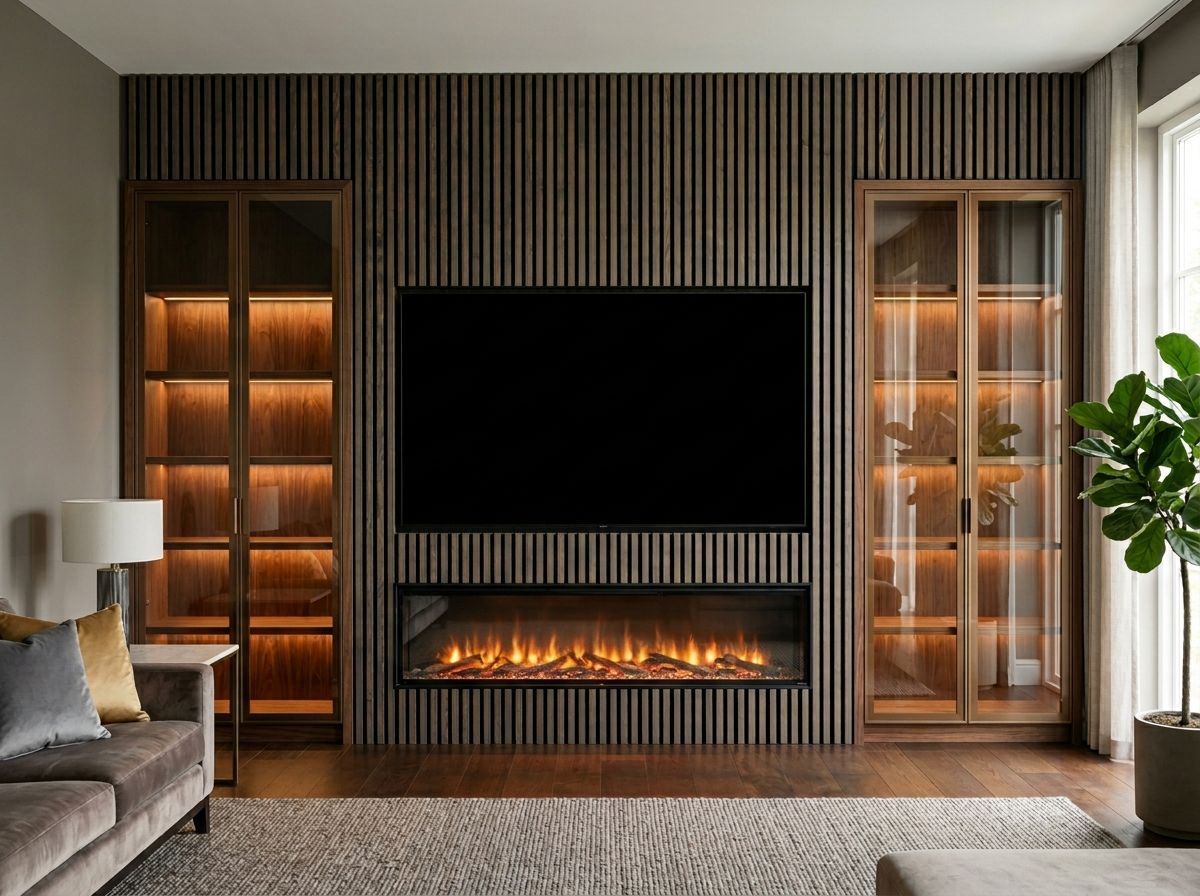
We finished a media wall for a client in Surrey a few weeks ago. Full-height flanking cabinetry, concealed AV, the lot. He texted us that evening to say it looked exactly how he'd pictured it. About a week later, he called.
He'd been round to someone's office and noticed the glazed doors on the fitted unit there. Brass hinges, reeded glass panels. You know the look. He sent me a photo and asked whether we could do something similar on his flanking cabinets.
Here's the thing: we'd talked about this at the start. Glass doors came up in the first design meeting. I told him we needed to lock the spec in before work began because it changes how you build the carcass. He decided he wanted solid painted doors. We agreed on that, built it, signed it off. Now I'm telling a good client that what he wants is possible but won't be a free afternoon.
We went back and did it at cost. He understood. What I took from it was that we need to get the glass door conversation visual earlier in the process. Once someone sees reeded glass on good hinges in person, a lot of people change their mind.
If you're planning a media wall and glass is anywhere in your head, this is worth reading before you get to design stage.
Why glass doors have to be decided before the build starts
Glass doors are not interchangeable with solid doors on the same carcass. The frame needs to be built with specific tolerances for the glass weight. Hinge positions and the type of hinge used are different. The face frame around the opening needs a certain profile to support glass correctly. If the carcass is built for solid doors and you later want glass, someone has to go back in, assess whether the frame will take it, have glass cut to the exact opening size by a specialist glazier, and return to hang and align everything. It adds up quickly.
Built in from the start, glass doors on flanking media wall cabinetry add roughly £800 to £1,200 per pair depending on glass type and door size. Retrofitted, expect to pay more once you factor in the glazier's lead time and the return visit. There is no shortcut around this. The decision needs to be made at design stage.
What glass doors actually do for a media wall
The practical argument for glass doors on the flanking cabinetry is that they let you have the clean look of closed storage while keeping display items visible. Books, objects, glassware, a drinks tray. Things that look good but that you don't want sitting on open shelves collecting dust. The glass keeps them visible and protected at the same time.
The design argument is different. Glass doors change the visual weight of a media wall significantly. A full wall of solid painted doors reads as flat and dense, even when the finish is good. Glass breaks that up. Light moves across the panels differently throughout the day. The wall feels less closed in.
Whether you want glass on all the door panels, just the upper section, or only on one side of the unit is part of the design conversation. Some of the best results we've done have mixed solid lower cabinetry with glass upper doors, which gives the practical storage at the bottom and the visual lightness higher up. If you're also considering a fire in the wall, our guide to bio ethanol media walls covers how that affects the build spec.
Glass options for media wall cabinetry
There are three finishes we use most often, each with a different feel.
- Clear toughened glass. Shows the contents directly. Works well if the shelving behind is dressed and the AV equipment is tidy. In a home where cables are a reality and shelves get loaded with random objects, clear glass can work against you. Everything behind it is on display at all times.
- Frosted or satin glass. Softens what's behind the door, lets light through without full transparency. Good for AV storage where you want to hide the equipment but still want the doors to feel light rather than solid. The most practical finish for everyday family use.
- Reeded or fluted glass. Textured, diffracts light across the surface. Currently the most requested glass finish on higher-end builds. It obscures the contents more than frosted glass while looking considerably more considered than a flat pane. The texture also means fingerprints are less visible. This is the finish that tends to change clients' minds when they see it in person.
All glass used in internal joinery should be toughened to safety glass standard. This is standard practice for us on every build regardless of the glass type chosen.
Hardware: the hinge matters more than most people expect
Glass doors are heavier than solid MDF or timber doors of the same size, and the hinge has to handle that weight over years of use. The hinge you'd use on a painted solid door is not the right specification for glass. We use glass-specific concealed hinges or exposed butt hinges in brass or brushed steel depending on the design brief.
Exposed brass hinges are currently popular because they complement the texture of reeded glass well and add a bit of craft detail to the unit. They show, which is the point. Concealed hinges give a cleaner look if the brief is more minimal. Both work. The choice comes down to the overall design direction.
Where this fits in the media wall design process
When we visit for a consultation, the door specification is one of the things we go through in detail before a design is drawn. Solid or glass, which cabinets, what glass type, what hardware. This is not a decision to leave until the build starts. It affects the quote, the material order and how we build the carcass.
If you're unsure at consultation stage, we can show references. Most clients who end up with reeded glass doors say they would have chosen them earlier if they'd seen them properly rather than just heard them described. We keep samples for exactly this reason.
The client whose job prompted this post did end up with glass doors. Reeded glass, brass hinges. It looks better than the original build. I just wish he'd seen a reference at the first meeting, because it would've saved us both the retrofit and he would've had it from day one. Book a consultation and we can go through the full door specification with you before anything is fixed.
Common questions
You can, but it costs more than getting it right at design stage. The carcass needs to be built with specific hinge positions and face frame tolerances for glass doors. Retrofitting means removing the existing doors, assessing whether the frame is suitable, having glass cut to exact size by a specialist glazier, and returning to hang and align everything. It's a full day's work on a straightforward unit. If glass doors are something you might want, say so at consultation.
The most common choices are clear toughened glass, frosted or satin glass, and reeded or fluted glass. Clear toughened glass shows the contents, which works well for display shelving and AV equipment you want visible. Frosted or satin glass gives a softer look and hides clutter. Reeded glass is textured, scatters light attractively and is currently the most requested finish on higher-end builds. All glass for internal doors should be toughened to safety glass standard.
Glass doors on flanking cabinetry add roughly £800 to £1,200 per pair to a media wall build, depending on glass type and door size. Reeded or patterned glass sits at the higher end. This is when the doors are designed in from the start. Retrofitting glass doors to an existing build will generally cost more because of the glazier's lead time, return visit and alignment work. All pricing is confirmed in writing before work begins.
Yes, particularly on clear or lightly frosted glass. Reeded and heavily textured glass is more forgiving because the texture breaks up fingerprint marks visually. If the unit is in a family home or a room that gets heavy daily use, a reeded or satin finish is a more practical choice than clear glass. We discuss this at design stage so the finish matches how the room actually gets used.
Not in any practical sense. A TV recess is open by design so the screen, cabling and any remote control signals are accessible. Glass doors on the flanking cabinetry are a different matter and work well for display shelving, AV equipment storage and any closed cabinet sections. Some clients ask about a sliding glass panel for the AV cabinet specifically, which we can accommodate, but it adds complexity and cost and the IR signal from remotes will not pass through most glass.